






 Arkadium's Holiday Mahjong Dimensions
 Mahjong Crimes - Puzzle Story
 Sweet Triple Mahjong
 Animal Block Pop Puzzle
 Mahjong Connect Gold
 Mahjong Classic
 Merge Flowers
 Hidden Object: My Hotel
 Candy Flow Factory
 Bubble Pillar
 Alien Intelligence Test
 Blankets
 MakeOver Glow Up Match
 House Design
 Design Show
 Gastro Town
 Cookingdom: Cook and Relax!
 Coloring by Numbers: Pixel House
 Combinations Daily
 Emerland Solitaire
 Girl Coloring Dress Up Games
 Bubble Shooter Witch Tower 2
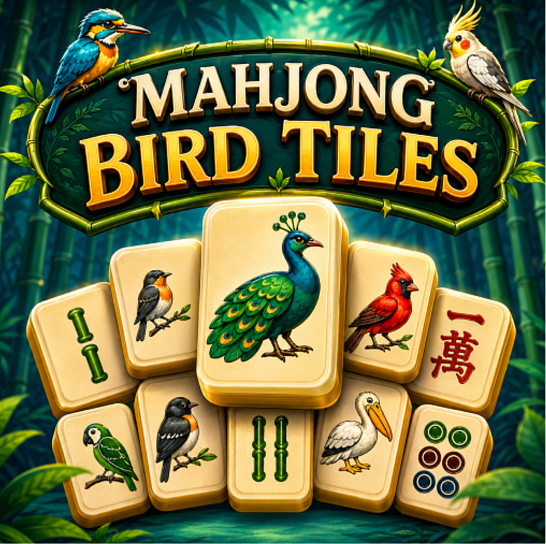
Mahjong Bird Tiles
Created by: LofGames.com
Some games ask you to race the clock, build an empire, or save the universe from certain doom. This one sensibly asks you to match tiles and take a breather. The goal is to clear each layered Mahjong solitaire board by finding pairs of identical tiles that are currently free to play. A tile is free when nothing is covering it and at least one of its sides is open, so the trick is not simply spotting a matching pair, but deciding which match will actually help you uncover the tiles underneath. That little distinction is where the brain workout lives, because grabbing the obvious pair can sometimes leave you with an awkward pile later. Look for matches that open up the widest areas of the board, reveal buried tiles, and keep your options flexible rather than merrily clicking the first identical pair you see. The colorful bird artwork gives the traditional tile-matching format a cheerful nature theme, with peacocks, songbirds, and other feathered designs adding a bit of personality to the familiar puzzle layout. If you enjoy classic Mahjong solitaire, Mahjong Connect, or quiet matching games that let you settle into a rhythm without unnecessary drama, this is very much in the neighborhood. It has the same satisfying appeal as sorting a messy drawer, except the drawer is made of decorative tiles and nobody can accuse you of avoiding actual housework. Mahjong itself is a Chinese game with roots in the 19th century, and its name is often written as 麻将 in simplified Chinese, pronounced 'ma jiang', roughly 'mah jyahng', although the solitaire computer version played today is different from the original four-player tabletop game. With its layered boards, simple rules, strategic tile selection, and relaxed pace, this is a good choice for a quiet puzzle break when you want something engaging enough to keep your mind occupied without making you feel as though you've accidentally enrolled in an advanced mathematics course.
Comments coming soon!